
Shooting the estuary at four in the morning: how Low Tide holds its nerve
The coastal noir gets its stillness from a production choice nobody notices — the tide table is the shooting schedule.
Listen to this story
Audio edition
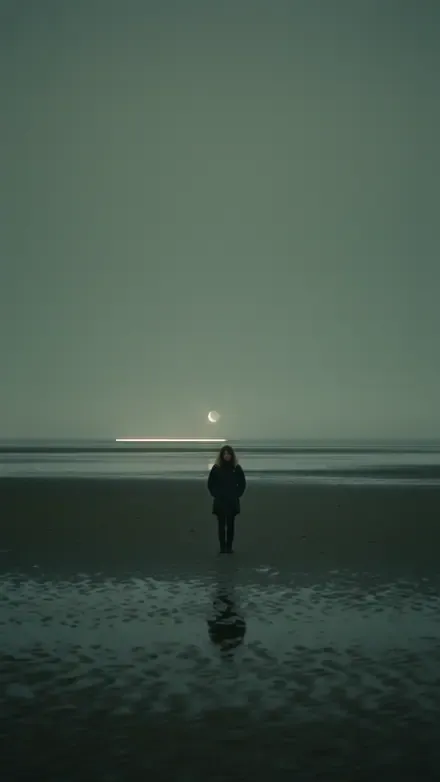
There is a shot in the third episode of Low Tide that lasts eleven seconds and contains the entire series: a woman standing on wet sand, the water a long way out, the light not yet arrived. Nothing moves except the frame’s idea of what might. On a phone, held close, it plays like held breath.
The stillness is manufactured by logistics. Low Tide schedules around the tide table — the production’s day begins when the water leaves and ends when it returns, and the scripts are written to the same clock. Scenes are set at low water because that is when the estuary becomes a stage: a flat, endless, vertical-friendly emptiness with a horizon line that sits naturally in the lower third of a portrait frame.
The cinematography leans on the format rather than apologising for it. Portrait framing is unkind to landscape and generous to figures; Low Tide solves the landscape problem by putting its horizon low and letting sky do the work of scale. The figure stays close, the world stays vast, and the phone’s frame — usually accused of claustrophobia — reads as exposure.
The location is not where the series is shot. The location is the series’ clock.
The crew describe a working pattern that sounds monastic. Call is two hours before low water. Blocking happens on the walk out — the sand records every footprint, so rehearsal and take have to share choreography, and the director of photography walks the frame backwards ahead of the cast like a mine-sweeper. Nothing electrical stands below the tide line except the camera itself, which lives on a rig the operator can lift and run with when the water turns. Twice a season, the schedule says simply: the sea decides.
There is a sound story here too. The estuary at low water is one of the quietest exteriors in Britain — no traffic, no crowd, a silence with texture. The production records thirty minutes of it every shooting day, and that bank of hush is laid under interior scenes shot elsewhere, which is why the whole series feels like it’s holding its breath even indoors. It is the kind of decision that costs nothing and identifies a show for life.
What the industry should take from it is not the aesthetic but the discipline: the series found a real place whose physics match the format, then let the place set the schedule. That is cheaper than fighting geography and it photographs like money.